7 Best Ways to Arrange Tabletop Decor in a Living Room?

Time:2026-09-17 Author:Madeline
0%

A well-arranged tabletop can make a living room feel calm, personal, and finished. Yet even beautiful objects may look crowded when every surface carries decoration. Learning How to arrange tabletop decor in a living room requires balance, scale, and a clear understanding of daily habits.

This guide explores seven practical ways to style coffee tables, consoles, side tables, and shelves. You will see how to combine books, trays, vases, candles, plants, and meaningful keepsakes without blocking conversation or movement. A wooden tray can group small items on a coffee table, while a tall ceramic vase may add height to a low console. Leave some empty space. It gives the eye room to rest.

Real homes rarely look perfect. A family may need space for remote controls, school papers, or an evening cup of tea. That matters more than copying a staged photograph. Experienced interior stylists often adjust arrangements according to furniture height, lighting, traffic flow, and cleaning needs. Heavy objects should stay stable, and fragile pieces deserve safer positions, especially in homes with children or pets.

Small changes help.

You may discover that one favorite ornament works better alone than beside several similar pieces. This guide also encourages thoughtful trial and error. Step back, view the room from the doorway, and notice what feels distracting. Then remove one item before adding another. A useful arrangement should look attractive, feel practical, and remain easy to live with.
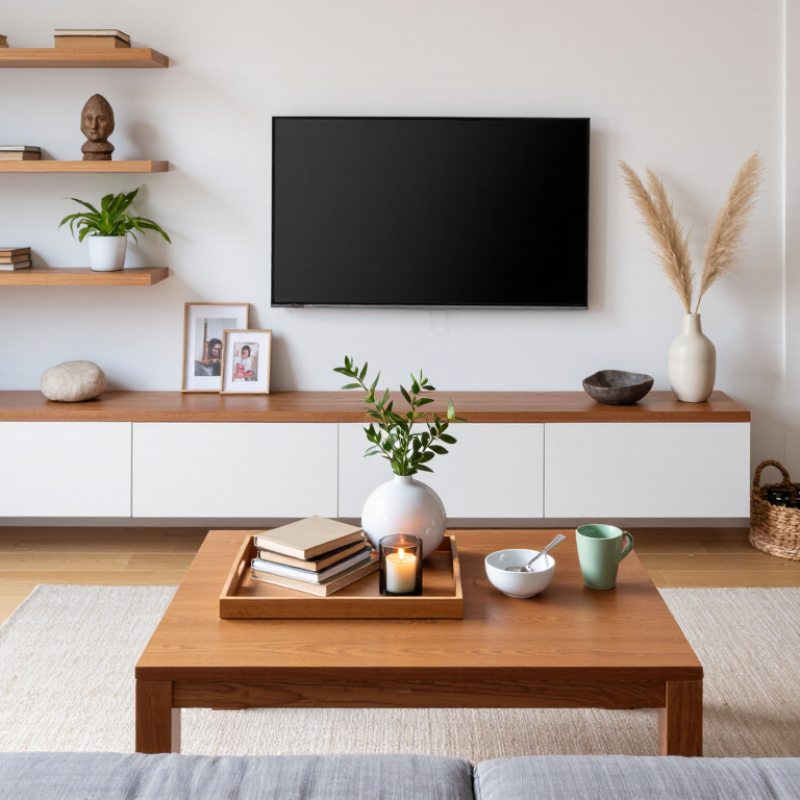
7 Best Ways to Arrange Tabletop Decor in a Living Room?

Assess the Tabletop Surface and Define Its Main Function

Assess the tabletop before choosing any decoration. Measure its width, depth, height, and clearance around nearby seating. Then test its surface. A glossy table reflects lamps beautifully, but it also reveals fingerprints and dust. Rough wood needs fewer heavy objects because visual texture already provides interest.

Define the table’s main function in the room. Is it for drinks, reading, remote controls, or display? The U.S. Bureau of Labor Statistics’ 2023 American Time Use Survey found that adults spent about 5.3 hours daily on leisure and sports. That time often happens near a coffee table, so comfort should guide styling. Leave a clear landing area for a mug, book, or small plate. Try keeping roughly one-third of the surface open.

I once arranged three tall objects in a neat row. It looked balanced, but nobody could use the table comfortably. A lower tray, one textured vessel, and a small natural element worked better.

The Global Wellness Institute’s 2024 Monitor valued the global wellness economy at about 6.3 trillion dollars in 2023, reflecting growing attention to restorative home environments. Avoid fragile pieces near active seating. Test the arrangement from standing height and from the sofa. It may look excellent in a photograph and awkward in real life.

Choose a Focal Piece to Anchor the Living Room Arrangement

A focal piece gives tabletop decor a clear visual destination. In residential styling, I often begin with one substantial object, such as a sculptural vase, framed artwork, or stone bowl. It should command attention without blocking conversation across the room. Choose a piece with visible height and texture. Then place smaller objects around it in uneven groups of three or five. This creates rhythm without making the surface look staged.

The National Association of Realtors’ 2023 Remodeling Impact Report found that 83% of buyers’ agents said staging helped buyers visualize a property as their future home. That finding supports a restrained focal point: people understand a room faster when its visual hierarchy feels intentional. The American Society of Interior Designers’ 2024 Trends Outlook also highlights personalization and wellbeing as important residential design directions. A focal piece can express both, but personal taste sometimes becomes clutter. I still make that mistake.

Tips: Keep the tallest object near the visual center, but shift it slightly off-axis for movement. Leave about one-third of the tabletop open. Repeat one color from the focal piece elsewhere in the room, perhaps through a cushion or ceramic accent. Test the arrangement from the sofa, doorway, and side angle. If every object competes, remove one. Let the room breathe.

Layer Decor by Varying Heights, Shapes, and Textures

A successful tabletop arrangement begins with height, not quantity. Place the tallest object toward the back, such as a narrow vase or sculptural branch. Add a medium piece beside it, then finish with a low bowl or stack of books. This creates a gentle visual rhythm. ASID’s 2024 Trends Outlook highlights sensory comfort and personal expression as important residential design priorities. Varying height supports both goals without making the surface feel staged.

Shapes should disagree slightly. Pair a round bowl with a rectangular tray and one irregular ceramic object. Repeated curves can look soft, but too many become sleepy. Texture prevents the display from appearing flat. Combine matte pottery, woven fiber, smooth glass, and a small metallic accent. The Global Wellness Institute valued the wellness real estate market at 438 billion dollars in 2023, showing continued interest in calming home environments. Tactile variety can make a living room feel more engaging, though it cannot replace good lighting or comfortable seating.

Leave visible space between groups. A practical rule is to keep roughly one-third of the tabletop clear, especially near seating areas. The U.S. Environmental Protection Agency reports that indoor pollutant levels may be two to five times higher than outdoor levels, so dust-prone clutter deserves attention. My own arrangements sometimes look balanced from the front but awkward from the side. Check the display while walking past it. Remove one object. Often, the arrangement improves.

Layering tabletop decor works best when pieces rise in clear steps. Low trays and books create a base, medium objects add shape and texture, and taller plants, vases, or lamps provide a focal point without making the arrangement feel flat.

Balance Color, Scale, and Visual Weight Across the Tabletop

7 Best Ways to Arrange Tabletop Decor in a Living Room

Balance Color, Scale, and Visual Weight Across the Tabletop

Start with one dominant color, then repeat it in two smaller objects. This creates connection without making the tabletop look overly matched. I usually test colors in daylight because warm bulbs can hide muddy tones.

Vary the height of your pieces. Place a tall vase near a low bowl, then add a medium-sized frame between them. The difference creates movement. Keep the tallest object slightly off-center. Symmetry can feel calm, but perfect symmetry often looks staged. Leave some empty space.

Use an odd number of objects, such as three or five. Group them closely enough to read as one arrangement. A small ceramic piece can soften a heavy wooden box. Balance visual weight, not just object count. A dark, wide item may need two lighter pieces beside it.

Choose one anchor item first. It might be a sculptural vase, a stack of books, or a shallow tray. Build around its shape and color. I often place the heaviest object near the table’s center, but this is not a strict rule. Check the arrangement from the sofa, doorway, and side angle.

Edit anything that competes for attention. Rotate objects slightly instead of lining every edge forward. Natural materials can add texture, while one reflective surface catches evening light. Keep delicate pieces away from crowded edges, especially in busy family rooms. My first arrangement is rarely the best one. Live with it for a day, then remove one piece.

Refine the Display with Practical, Seasonal, and Personal Accents

A tabletop display should support daily life, not compete with it. Start with one shallow tray, leaving space for keys, glasses, or a book. The U.S. Environmental Protection Agency reports that indoor pollutant levels can be two to five times higher than outdoor levels. Therefore, choose washable objects and keep ventilation paths clear. Avoid delicate pieces beside frequently used seating. Practical beauty lasts longer.

Seasonal accents can refresh the room without creating visual clutter. In spring, use a small ceramic bowl with fresh branches. Summer suits woven textures and pale stone. Autumn welcomes a low wooden box, while winter benefits from candlelight and evergreen cuttings. Keep the tallest object near the back, and vary height with two or three smaller pieces. The National Association of Realtors’ 2023 Remodeling Impact Report connects home improvements with measurable homeowner satisfaction, including a reported “joy score” for several projects. A modest display can create that feeling without a major change.

Personal objects provide the strongest character. Place a travel photograph, inherited dish, or handmade sculpture where it can be touched and noticed. I still overfill trays sometimes. The result looks crowded, especially beside a patterned sofa. Remove one item and observe the balance for a day. Odd numbers often feel natural, but symmetry may work better in a formal room. Leave one quiet area. It gives the eye somewhere to rest.

7 Best Ways to Arrange Tabletop Decor in a Living Room? - Refine the Display with Practical, Seasonal, and Personal Accents

Method Best Surface Recommended Arrangement Practical Function Seasonal Update Personal Accent Maintenance Tip
1Create a Three-Level Group Coffee table or console table Combine one tall object, one medium object, and one low object, such as a vase, a candleholder, and a tray. Creates visual depth while keeping the arrangement easy to see across the room. Use branches in spring, dried grasses in autumn, or evergreen cuttings in winter. Display a handmade vase, a favorite vessel, or an object collected during travel. Keep the tallest item away from the main seating sightline and remove obstructive pieces when entertaining.
2Use a Decorative Tray Coffee table or ottoman Place a tray beneath a small group of items, leaving visible space around the objects. Defines the display area and makes smaller accessories easier to move for cleaning or meals. Change the tray contents with seasonal candles, a small bowl of pinecones, or a vase of fresh flowers. Include a meaningful book, ceramic piece, or small framed photograph. Choose a stable, flat tray and avoid filling it so completely that everyday use becomes inconvenient.
3Arrange by Visual Triangle Large coffee table or media console Position three related objects at different points to form an imaginary triangle rather than a straight line. Balances the display and prevents accessories from appearing crowded or overly symmetrical. Replace one point of the triangle with a seasonal color, plant, or natural object. Mix a personal photo, a well-loved book, and a sculptural object with complementary colors. Repeat one color or material at least twice to make the grouping feel intentional.
4Layer Books with Objects Coffee table, side table, or open shelving Stack two or three books horizontally, then place a compact object on top and a lower object beside them. Adds height and provides an accessible place for reading material or remote controls. Rotate books by cover color and add a lightweight floral, botanical, or holiday accent. Select books related to hobbies, art, travel, cooking, or family interests. Use stable stacks and keep delicate items away from the edge of the table.
5Balance Open and Solid Shapes Console table or mantel-style shelf Pair solid forms, such as boxes or bowls, with open forms, such as lanterns, frames, or sculptural loops. Prevents the display from looking visually heavy and allows light to pass through the arrangement. Use woven textures in warmer months and heavier ceramic, wood, or metal textures in cooler months. Combine a family keepsake with a simple architectural or geometric object. Distribute heavier objects across the surface and check that tall pieces cannot be easily knocked over.
6Add Natural Texture Side table, coffee table, or console table Introduce one natural element, such as a potted plant, fresh stems, wood, stone, or woven fiber. Softens hard furniture lines and adds texture without requiring many decorative objects. Use fresh foliage in spring and summer, dried stems in autumn, and hardy greenery in winter. Display a locally collected stone, a handmade basket, or a plant with personal significance. Protect wood and fabric surfaces from water, soil, and condensation with a saucer or waterproof liner.
7Keep a Breathing Zone Any tabletop, especially a small side table Group accessories in one defined area and deliberately leave part of the surface open. Preserves usable space for drinks, reading, lighting controls, or daily household items. Swap a few accents instead of adding more objects when the season changes. Reserve the open area for a rotating favorite item, handwritten note, or small family display. Review the arrangement regularly and remove items that no longer serve a practical or decorative purpose.

General guideline: Keep tabletop decor stable, proportionate to the furniture, and easy to move. A restrained arrangement with varied height, texture, and personal meaning usually looks more refined than a crowded display.

FAQS

How should I assess a tabletop before decorating it?

Measure its width, depth, height, and surrounding clearance. Check whether the surface is glossy, rough, or easily marked. Leave enough room for people to reach drinks and books.

What should a coffee table’s main function determine?

Decide whether it supports drinks, reading, remote controls, or display. Keep about one-third of the surface open. A clear landing area matters.

How can I avoid making the table uncomfortable to use?

Test the arrangement from the sofa and standing height. Avoid fragile objects near active seating. Three tall objects may look balanced but block practical use.

What makes a strong focal piece?

Choose one substantial object, such as a sculptural vase, framed artwork, or stone bowl. It should attract attention without blocking conversation. Keep it slightly off-center.

How many objects should I group together?

Groups of three or five often create natural rhythm. Place them close enough to appear connected. Odd groupings work well, though they are not a strict rule.

How can I balance color and scale?

Start with one dominant color and repeat it in two smaller objects. Pair a tall vase with a low bowl and a medium frame. Test colors in daylight.

How do I balance visual weight?

A dark, wide object may need two lighter pieces nearby. Combine rough wood, smooth ceramics, and one reflective surface. Count visual weight, not just objects.

How can I tell whether the arrangement needs editing?

View it from the sofa, doorway, and side angle. Remove anything competing for attention. Live with it for one day. My first arrangement is rarely the best.

Conclusion

Learning how to arrange tabletop decor in a living room starts with understanding the surface and its purpose. Consider whether the table is mainly for conversation, display, storage, or daily use, then choose one focal piece to anchor the arrangement. Build around it with layers of different heights, shapes, and textures, such as books, vessels, trays, natural elements, or sculptural objects. This creates depth while keeping the display visually interesting and easy to appreciate from different angles.

A successful arrangement also depends on balance. Distribute color, size, and visual weight across the tabletop so one side does not feel overcrowded or empty. Leave enough open space for practical use, and refine the display with personal accents or subtle seasonal details that can be changed over time. By combining function, proportion, texture, and personality, you can create a tabletop arrangement that feels polished, welcoming, and naturally connected to the rest of the living room.

Madeline

Madeline

Madeline is a dedicated marketing professional with a wealth of expertise in our company's core offerings. With a keen understanding of the industry, she brings a unique perspective to her role, consistently delivering high-quality content that highlights the superior aspects of our products. As......