A cozy bedroom in 2026 should feel personal, calm, and practical rather than heavily decorated. Current interiors favor natural textures, warm lighting, softer colors, and flexible furniture that supports daily routines. The best rooms often combine modern simplicity with familiar objects, such as a woven basket, a cotton quilt, or a small wooden bedside table.
How to choose home decor for a cozy bedroom style begins with observing how the room is used. Measure the floor space before purchasing furniture. Leave clear walking paths around the bed. Select storage that hides clutter without making essentials difficult to reach. Layering matters: pair breathable bedding with a textured throw, then add two or three supportive cushions. Warm light helps. Bulbs near 2700K often create a gentler evening atmosphere than bright, cool lighting.
Materials deserve careful attention. Look for durable fabrics, stable furniture joints, and finishes with clear safety information. Natural wood, linen, wool, and cotton can add visual warmth, but quality varies widely. Check care labels and product certifications before buying. A beautiful item is not automatically a useful item. I have seen bedrooms become uncomfortable when owners follow trends without considering dust, allergies, or cleaning time. That mistake is easy to repeat. Choose washable covers, rounded edges, and decor that feels comfortable at arm’s reach. Personal photographs, a reading lamp, or a familiar scent can complete the space. Comfort comes first.
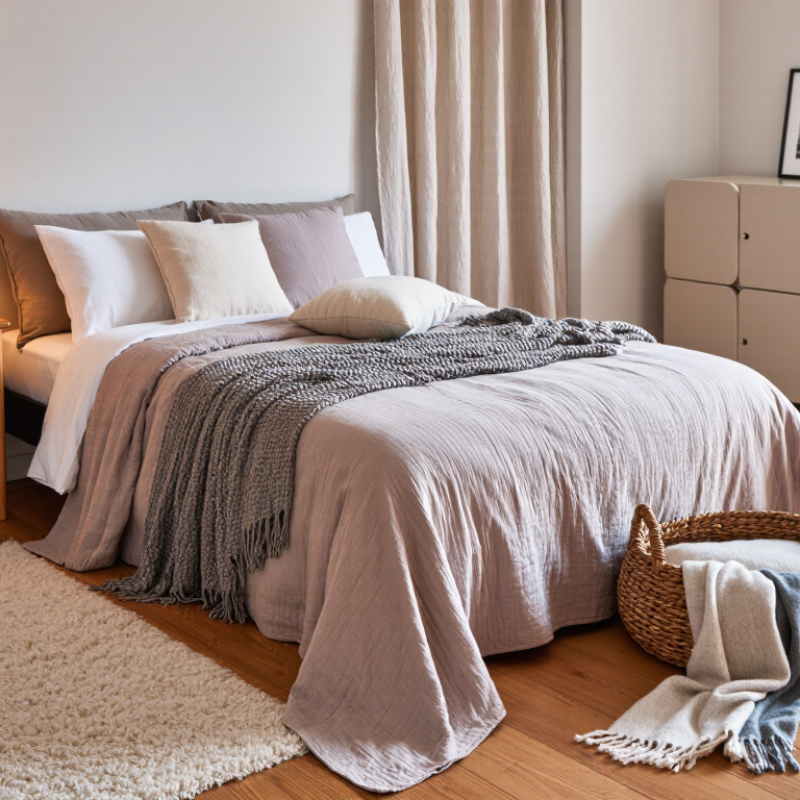
A cozy bedroom begins with comfort, not decoration. In my experience, the most inviting rooms use three layers: soft texture, controlled light, and breathable air. Choose cotton, linen, wool, or responsibly sourced wood for touchable warmth. Avoid filling every surface. An uncluttered bedside table can feel calmer than expensive accessories.
Lighting should support different evening needs. Use warm, dimmable lamps near the bed, with brighter task lighting elsewhere. The U.S. Department of Energy reports that LED bulbs use at least 75% less energy than incandescent bulbs. They also produce less heat, which helps small bedrooms stay comfortable.
I once used only overhead lighting, and the room felt harsh. That choice looked efficient, but it was not restful.
Air quality deserves equal attention. The U.S. Environmental Protection Agency states that indoor pollutant levels can be two to five times higher than outdoor levels. Select low-emission finishes, wash bedding regularly, and leave space around furniture for airflow. A quiet fan may help, but excessive noise can undermine relaxation.
Temperature matters too; the U.S. Energy Information Administration reports that space heating consumes the largest share of household energy use. Better insulation, layered bedding, and lined curtains can create warmth without overheating the room. Trends change quickly. Your body’s response is the better test.
How to Choose Top Cozy Bedroom Decor in 2026?
Begin with the room’s measurements, not the trend forecast. Record wall lengths, ceiling height, door swings, window positions, and radiator clearance. A 2024 report from the National Association of Home Builders shows that new homes continue to favor larger primary bedrooms, but older rooms need stricter planning. Large furniture can still make a compact bedroom feel compressed.
Keep a clear walking route of about 60 centimeters around the bed where possible. Place the bed against the most stable wall, away from direct drafts and awkward door intersections. The 2023 Houzz & Home Study indicates that homeowners increasingly prioritize functional improvements during renovations. That principle matters here. A narrow bedside shelf may serve better than a deep table. I once measured the bed but ignored the open wardrobe door. It looked fine on paper. It was annoying every morning.
Natural light should guide color, texture, and furniture height. Observe the room at sunrise, midday, and evening before buying decor. The U.S. Department of Energy’s 2024 residential lighting guidance emphasizes daylight control, glare reduction, and efficient layered lighting. Sheer curtains can soften harsh afternoon brightness, while blackout panels support darkness at night. Avoid placing a tall headboard directly across a bright window unless glare is controlled. Pale walls may feel airy in northern light, but they can look cold in shaded rooms. Test fabric and paint samples beside the window. Small samples deceive. A cozy room needs visual comfort, not merely more objects.
| Assessment Dimension | Practical Measurement or Condition | What It Means for Cozy Decor | Recommended Decor Direction | Useful 2026 Planning Tip |
|---|---|---|---|---|
| Bedroom Floor Area | Under 10 m² Compact bedroom with limited circulation space. |
Large furniture and heavy patterns can make the room feel crowded. | Light colors Wall-mounted lighting Storage beds | Choose furniture with visible legs and keep the center of the room visually open. |
| Bedroom Floor Area | 10–15 m² Typical comfortable size for a bed, bedside table, and compact wardrobe. |
Allows a balanced combination of softness, storage, and layered lighting. | Upholstered headboard Area rug Layered textiles | Use one main decorative focal point, such as a textured headboard or large artwork. |
| Bedroom Floor Area | Over 15 m² More flexibility for seating, reading, or dressing zones. |
Oversized rooms may feel less intimate without visual zoning. | Accent chair Bench Large rug | Group furniture into functional zones instead of placing every item against a wall. |
| Bed Clearance | Aim for about 60–75 cm of walking space beside and at the foot of the bed where possible. | Clear circulation improves comfort and prevents the room from feeling cramped. | Slim nightstands Compact benches | Measure drawers and doors in their open position, not only the furniture’s closed footprint. |
| Layout Shape | Rectangular rooms usually suit a bed centered on the longest uninterrupted wall. | A strong axis creates order and makes the room feel calmer. | Centered bed Symmetrical lighting | Keep the bed away from blocking the main window, radiator, or entry path. |
| Irregular Corners | Alcoves, sloped ceilings, and narrow corners can reduce usable floor area. | Awkward spaces are best used for storage or small-scale decorative features. | Built-in shelves Low cabinets Corner lamps | Use the lowest parts of a sloped ceiling for baskets, drawers, or low seating. |
| Natural Light Level | Bright daylight for several hours, often near south- or east-facing windows in the Northern Hemisphere. | Warm neutrals and medium-depth colors can add softness without making the room dull. | Linen curtains Warm beige Natural wood | Use adjustable curtains or blinds to control glare, heat, and morning brightness. |
| Natural Light Level | Low daylight caused by small, shaded, or north-facing windows in the Northern Hemisphere. | Dark finishes can absorb available light and make the space feel enclosed. | Cream tones Reflective accents Layered lamps | Combine ceiling, bedside, and indirect accent lighting instead of relying on one central fixture. |
| Window Position | Windows directly beside or opposite the bed influence glare, privacy, and furniture placement. | Window treatments should soften light without eliminating ventilation or daylight. | Light-filtering shades Full-length curtains | Install curtains higher and wider than the window frame when wall space allows to create a taller, broader appearance. |
| Color Reflectance | Light-colored walls generally reflect more light than dark-colored walls; matte finishes reduce harsh glare. | Soft, low-contrast palettes make small or dim bedrooms feel more spacious and restful. | Warm white Mushroom Dusty blue | Test paint or fabric samples at morning, afternoon, and evening because daylight changes throughout the day. |
| Lighting Temperature | For relaxing bedroom illumination, warm light around 2,700–3,000 K is commonly comfortable. | Warm light supports a softer evening atmosphere than cool, blue-white light. | Dimmable bulbs Bedside sconces | Use separate controls for general, task, and accent lighting so the mood can change without rearranging decor. |
| Textile Comfort | Layer breathable materials such as cotton, linen, wool, or woven fibers according to the season. | Texture adds warmth and depth even when the color palette is simple. | Layered bedding Woven throw Textured rug | Mix two or three related textures while limiting strong patterns to avoid visual clutter. |
| Storage Pressure | Visible clothing, cables, and miscellaneous items can quickly overwhelm a small bedroom. | A cozy appearance depends as much on organization as on decorative accessories. | Under-bed storage Closed baskets Bedside drawers | Prioritize closed storage for visual calm and keep frequently used items within easy reach. |
| Final Comfort Check | Review daylight, walking paths, ventilation, privacy, lighting control, and storage together. | The most successful decor balances appearance with everyday usability. | Comfort first Flexible layout Low clutter | Before purchasing decor, mark the furniture footprint on the floor with painter’s tape to verify scale and circulation. |
For 2026, a cozy bedroom begins with a warm, controlled color palette. Try creamy white, muted terracotta, soft camel, or dusty olive. These shades create warmth without making the room feel visually heavy. I often test paint samples beside the bed during morning and evening light. Colors can change more than expected.
Keep the strongest color near eye level, such as on a headboard, wall, or large textile. Use quieter shades for curtains, bedding, and nearby furniture. A small amount of deep brown can add definition. Too much beige, however, may look flat. I once layered several similar neutrals and lost the room’s character.
Materials should feel pleasant, durable, and appropriate for daily use. Choose breathable cotton or linen for sheets, then add a thicker woven blanket for texture. Wool, boucle, and brushed wood can make the space feel warmer through touch. Natural fibers usually age gracefully, but they still need careful cleaning. Place a washable rug beside the bed, especially on cold floors. Combine matte surfaces with one gentle sheen, such as a ceramic lamp or smooth wooden tray. Avoid filling every corner. Empty space helps soft materials look intentional. A slightly imperfect arrangement can feel more restful than a carefully staged room.
Choose a warm color palette and materials that help create a softer, more insulated bedroom atmosphere.
Lower thermal conductivity generally indicates better resistance to heat transfer. Wool, cotton, linen, polyester textiles, and wood are commonly used in bedrooms because they add softness, texture, or natural warmth. Combine these materials with terracotta, muted ochre, warm beige, dusty rose, or soft brown accents for a cozy 2026-inspired palette.
Values are representative approximate thermal-conductivity figures in W/m·K; actual performance varies with density, moisture, weave, and construction. Reference: Engineering Toolbox material-property tables and standard building-material data.
How to Choose Top Cozy Bedroom Decor in 2026?
A cozy bedroom in 2026 should feel layered, not crowded. Begin with furniture that supports easy movement and restful routines. A low bed, compact nightstand, and narrow bench can create useful structure. Keep at least 24 inches of walking space around major pieces. Measure twice. I once chose a beautiful oversized chair, but it blocked a drawer and made the room frustrating.
Build softness through textiles with different weights. Place a tightly woven rug beneath the bed, then add cotton sheets, a quilt, and one heavier throw. Vary texture more than color. Linen, brushed cotton, and knitted fabric create depth without visual noise. Choose breathable materials for warm sleepers. Keep extra blankets in a closed basket, not on every surface.
Lighting should arrive in layers. Use a gentle ceiling fixture, adjustable bedside lamps, and a low accent light near the floor. Warm light around 2700K often feels calmer at night. Decorative details should carry personal meaning. Try framed sketches, a ceramic bowl, or a small stack of well-used books. Avoid filling every empty corner. Empty space matters. My first styling attempt looked polished but strangely cold, which reminded me that comfort cannot be measured by decoration alone. Recheck the room after sunset, because daylight can hide harsh shadows and awkward glare.
A cozy bedroom should feel personal before it looks fashionable. Start with touch: washed cotton bedding, a wool-like rug, and curtains that soften morning light. Choose warm neutrals, rounded furniture, and layered lamps for a modern but restful atmosphere. Keep pathways clear. A beautiful room can still feel uncomfortable when storage is poor.
Select low-emission finishes, washable textiles, and solid wood with transparent sourcing. Avoid filling every surface with new objects. Reuse a bedside table, repair a chair, or choose secondhand decor when possible. The 2022 Global Status Report for Buildings and Construction found that buildings used 34% of global energy and produced 37% of energy and process-related carbon emissions. Small choices matter, although they are not perfect.
Personal style should guide trends, not chase them. Display one meaningful photograph, a handmade ceramic piece, or books with visible wear. Use dimmable lighting and separate reading light from general lighting. I still get this wrong. Too many “cozy” layers can create dust and visual noise. Review the room after one week. Remove anything that blocks movement, irritates your skin, or feels performative. Sustainable comfort is practical, calm, and lived-in.
Record wall lengths, ceiling height, window positions, door swings, and radiator clearance. Measure twice. Large furniture can overwhelm a small room.
Aim for about 60 centimeters around the bed where possible. Check wardrobe doors and drawers too. Paper plans can miss daily annoyances.
Put it against the most stable wall, away from direct drafts and door intersections. Avoid blocking windows or creating awkward corners. Comfort matters more than symmetry.
Watch the room at sunrise, midday, and evening. Pale colors may feel airy in northern light but cold in shade. Test samples beside the window.
Sheer curtains can soften strong afternoon glare. Blackout panels help create darkness at night. Layer both when the room needs flexibility.
Try washed cotton bedding, a wool-like rug, rounded furniture, and warm neutrals. Keep pathways clear. Soft textures are useful, not merely decorative.
Consider low-emission finishes, washable textiles, and responsibly sourced solid wood. Reuse a bedside table or repair an older chair. New is not always better.
Display one meaningful photograph, handmade object, or well-used book. Too many layers can collect dust and create visual noise. I still get this wrong.
Use dimmable general lighting and a separate reading light. Place the reading lamp within easy reach. Bright overhead light can feel harsh at bedtime.
Live with the room for one week, then review it. Remove anything blocking movement or irritating your skin. A beautiful room can still fail daily.
Creating a cozy bedroom in 2026 begins with understanding how comfort, function, and personal expression work together. Start by assessing the room’s size, layout, storage needs, and natural light so every choice feels balanced rather than crowded. Soft, warm colors can create a calming atmosphere, while natural and tactile materials add depth and visual comfort. When considering how to choose home decor for a cozy bedroom style, focus on pieces that support relaxation and reflect your daily habits.
Build warmth through layers: combine practical furniture with inviting bedding, textured rugs, curtains, cushions, and carefully positioned lighting. Ambient lamps, gentle task lighting, and subtle decorative details can make the room feel peaceful at different times of day. The best design also balances personal style with sustainability and modern trends by selecting durable, adaptable, and responsibly made elements. Ultimately, a successful cozy bedroom should feel comfortable, individual, uncluttered, and welcoming while remaining practical for everyday living.

Dehua Decor